



In the complex dynamics of tax disputes, a clash often occurs between the tax authority's interpretation and the taxpayer's business reality. This is where the legal maxim "Facta sunt potentiora verbis" plays a crucial role. Literally translating to "deeds or facts are more powerful than words", this principle serves as a foundation for Judges in the Tax Court to dissect the material truth behind piles of administrative documents and theoretical arguments.
The Indonesian Tax Court adheres to the principle of free evaluation of evidence to seek material truth (Article 76 of the Tax Court Law). The Facta sunt potentiora verbis maxim asserts that narratives, conjectures, or assumptions—however logical they may seem—hold no binding legal force if they contradict the facts revealed during court proceedings.
Tax authorities (the Appellee) often make fiscal corrections based on the assumption that a transaction is unreasonable or non-existent, particularly in related-party transactions. However, this maxim demands that every correction be supported by authentic evidence. If the Appellee merely presents verbal arguments without empirical data support, while the Taxpayer (the Appellant) presents physical evidence of cash and goods flow, then the facts must prevail.
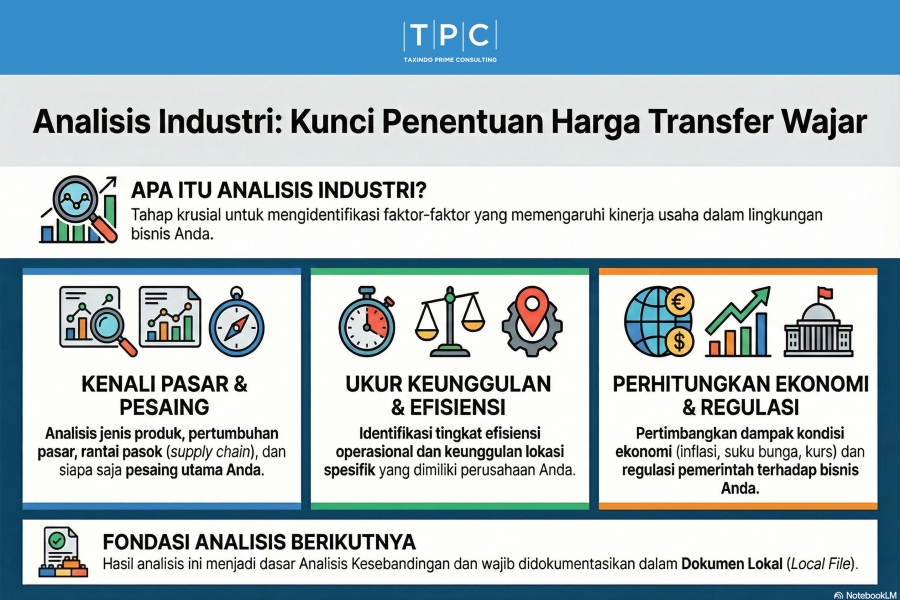
The most tangible application of this principle is seen in Transfer Pricing disputes. Auditors frequently deem service payments (such as management fees or royalties) to affiliates as transactions lacking economic substance, re-characterizing them as profit distributions or constructive dividends.
In court, Taxpayers invoke Facta sunt potentiora verbis to dismantle such presumptions. They present "facts" in the form of contracts, payment proofs, work reports, and tangible economic benefits derived from the services. When on-the-ground facts demonstrate that services were indeed rendered and beneficial to the business, the "constructive dividend" narrative built upon the assumption of special relationships is legally nullified.
Tax Court Judges will assess that the existence of the transaction (fact) is stronger than the allegation of profit manipulation (words) which the Appellee fails to prove. This aligns with the principle that the tax authority may not use baseless conjectures as legal facts to establish tax liabilities.
Facta sunt potentiora verbis is not merely a Latin phrase adorning a verdict; it is an instrument of legal protection for Taxpayers. This principle serves as a reminder that in tax law, economic reality and physical evidence are king. A tax correction cannot be sustained by rhetoric alone; it must stand on a foundation of irrefutable facts.












 tpc.consulting
  tpc.consulting
  info@taxindo.co.id